
Find Your Shutoffs + Freeze Protection
A free, plain-English guide. Walk your house once on a calm day, so you know exactly what to turn when water is on the floor.
v1.0 – Oct 2026 · Made with AI help, then checked by hand against public sources.
1. The main water shutoff
What it is: the one valve that turns off water to the whole house (proper name: main shutoff valve).
Where to look: near where the water line comes into the house. Common spots:
- Basement or crawlspace wall, often the side facing the street
- Next to the water meter, if your meter is inside
- Utility room, near the water heater, or in the garage
- Warm climates: outside near the foundation or in a covered box
- On a well: near the pressure tank
What it looks like, and what OFF looks like:
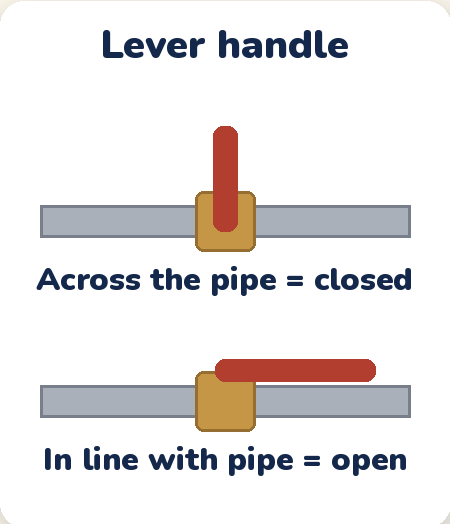
- Lever handle (a ball valve): a quarter turn. Lever across the pipe = OFF. Lever in line with the pipe = ON.
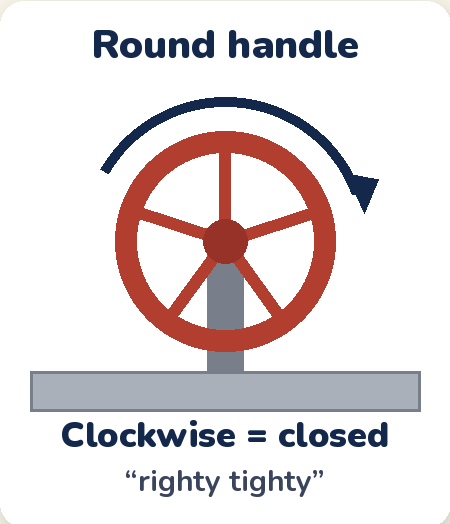
- Round wheel handle (a gate or globe valve): turn clockwise until it stops = OFF. It takes several turns.
No valve inside? Some homes only have the valve at the meter box by the street (often called the curb stop). It may need a special key and usually belongs to the water utility, so call them before you use it.
Stuck valve? Don't force it with a big wrench. Old valves can break. Have a licensed plumber replace it before an emergency.
2. Sink, toilet and appliance shutoffs
Most leaks start at one fixture. These small valves (proper name: supply stops) stop that one leak without shutting down the house.
- Under a sink: usually two valves. Hot on the LEFT, cold on the RIGHT.
- Behind a toilet: one valve, low on the wall or floor, cold water only.
- Washing machine: two valves behind it, hot left, cold right.
- Water heater: the shutoff is on the cold supply line going into the heater.
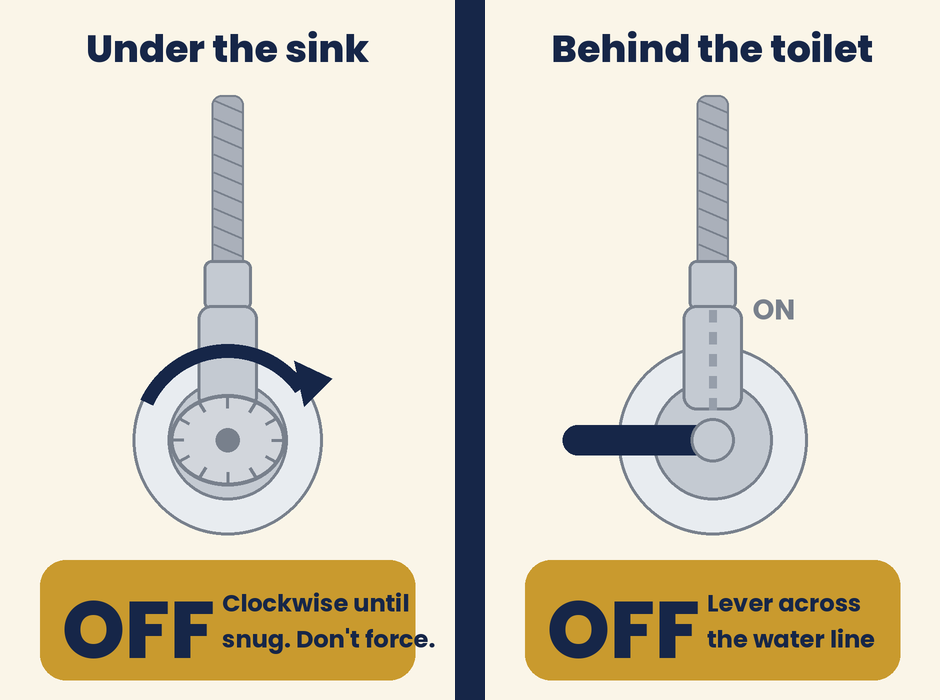
Two shapes you'll see: an angle stop comes out of the wall and turns up at a right angle. A straight stop comes up out of the floor and goes straight up.
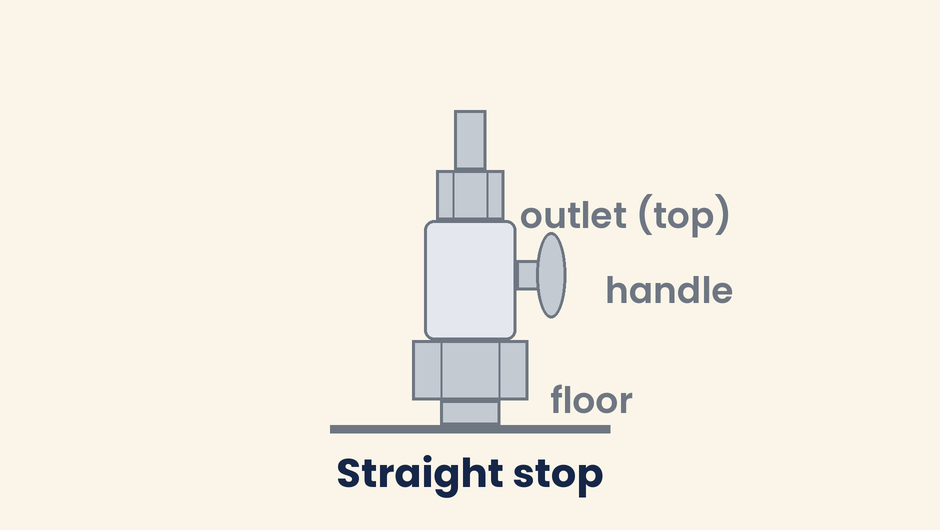
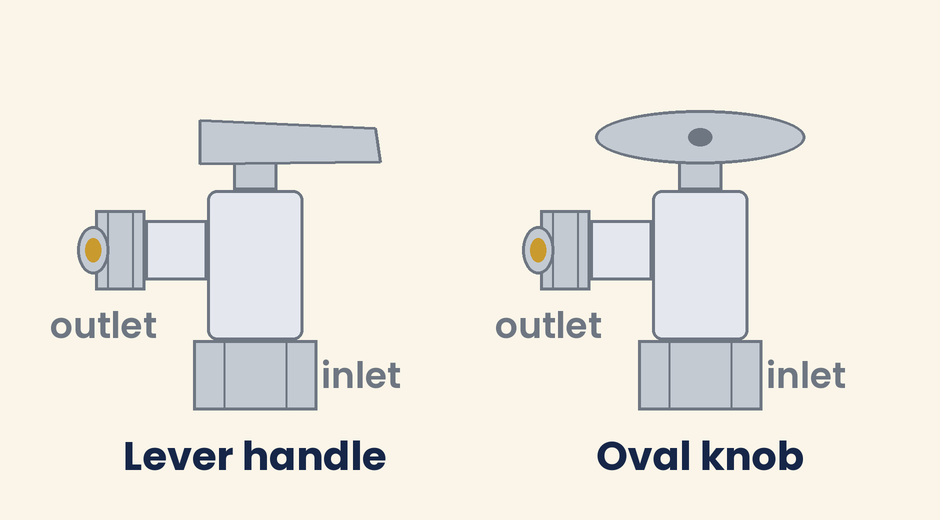
What OFF looks like: oval or round knob, turn clockwise until it stops. Small lever (quarter-turn), lever across the pipe.
No valve under the fixture? Some older homes don't have one. Use the main shutoff, and ask a plumber to add one.
3. Outdoor spigots
An outdoor spigot (also called a hose bib or sillcock) often has its own shutoff inside the house, on the pipe running to that wall.


4. Freeze protection basics
- Disconnect, drain and store garden hoses.
- Close the indoor shutoff for each outdoor spigot, then open the spigot outside to drain it.
- Insulate pipes in unheated spaces: crawlspace, garage, attic.
- Keep the garage door closed if water lines run there.
- In very cold weather, open sink cabinets on outside walls and let cold water drip from a faucet served by exposed pipes.
- Away from home? Keep the heat at 55°F or higher.

If a pipe freezes
- Keep the faucet open. Running water helps melt the ice.
- Warm the pipe with a hair dryer, a heating pad, or towels soaked in hot water. Never use an open flame.
- Can't find it, can't reach it, or can't thaw it? Call a licensed plumber.
If a pipe bursts
Shut off the main first, then call a plumber. If water is near outlets, cords or your electrical panel, stay out of it and call a pro.
5. Your 10-minute walk-through
Tap to check. (Checks stay on this page only while it's open.)
Want the full room-by-room map with space to mark every valve? See the Shutoff Valve House Map and our other winter printables.
Sources
- American Red Cross: Frozen Pipes
- University of Illinois Extension: Water pipes
- ENERGY STAR: Seal and Insulate
v1.0 – Oct 2026 · Made with AI help, then checked by hand against public sources. Honest Bob Co. — For the people who fix it.